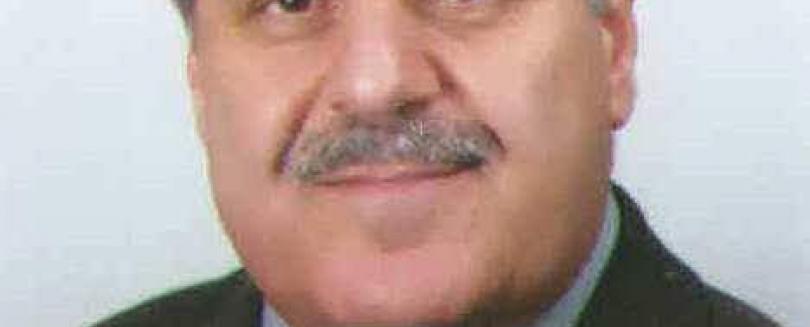
A Lecture, Zuhair Abu Fares/ Deputy Chairman of the Board of Commissioners of IEC in the 2nd international conference of “The Vision of His Majesty King Abdullah II - A Roadmap towards the State of Citizenship and the Development of the Society”
Publication date: April 4th, 2019.
The lecture of Zuhair Abu Fares/ deputy chairman of the Board of Commissioners of IEC
In the 2nd international conference of “The Vision of His Majesty King Abdullah II - A Roadmap towards the State of Citizenship and the Development of the Society”
Amman-Petra University 3/4/2019
Political reform in Jordan – IEC sample
Your highnesses, excellences and distinguished guests,
Peace be upon you all,
The course of political life of the Jordanian state that lasted for a complete century, leads us to a fundamental conclusion: that the relationship between the political system and people have remained constant, and that this relationship has clear principles established in the social contract in the 1920s, the Kingdom’s constitution in 1952 and in the national convention in 1991. It is a well-established relationship in the framework of the hereditary royal representative governance.
This formula is still founded on people’s choice and their free will with no compulsion or coercion.
Throughout this course Jordan has confronted several challenges and circumstances (as each country has its own challenges), no one lives in the thin air; Jordan has passed during its historical course in many sharp turns, starting from the first kingdom and the Zionist Movement’s ambitions, to the Cold War and its polarizations, reaching the earthquake of the Arab Spring and its consequences that are still shaking wide region of the Arab World; all these can be named as circumstances or, if you wish, as the Jordanian political experience which was not easy at all.
Nevertheless, Jordan has made its choice since the eighties to be a public and official choice at the same time in the direction of democracy, the development of political life and the public participation in ruling by adopting free elections and polling boxes to be the true reflection of people’s free will in the decision making related to their reality and future.
Yes, there are always circumstances and challenges that face countries and peoples, but what matters is how to turn these circumstances into a motivation for reformation and development.
Brothers and sisters,
Our people have consciously and voluntarily chosen the gradual and well-considered reforms for which they go confidently and at an appropriate pace imposed by their personal experience and their political and social reality.
No useless jumps with unknown results, until reaching the aspired parliamentary governments.
Here, we should refer to the truth that difficulties and challenges faced our country didn’t create an obstacle but a motivation for the historical accomplishment achieved and represented in the convergence of the leadership and people’s will for the political reform.
Here, we must consider the bases that determine the individual’s relationship with the political system and the State with all its departments.
And here stems the question: what establishes a state of communal conscience that sanctifies noble social values? And how to build a solid foundation for the citizen’s behavior in a strong civil state - the state of law, institutions and justice?
The democratic approach needs responsible freedom today more than ever before. At the time the digital world is full of hate, racism and factionalism speeches, the democratic approach today cannot be separated from the concept of “responsible freedom”. This approach, alone, ensures the public participation and monitoring the state’s performance with all its departments; it is the panacea for then society from its fatal diseases specially corruption in all its forms and colors.
These principles and reform orientations were clearly demonstrated by His Majesty King Abdullah II in his discussion; in other words; the public’s will has matched up with the leadership’s will in the importance of this reform that will bring stability to Jordan and will build the state of citizenship, development and progress.
Brothers and sisters,
The engagement of the youth in this great national project forms the most important element in reformation and the tools of change. In a society where the percentage of people under 30 years old is 70%, they are the most able to make a difference and to translate the national orientations in a correct manner that serves the project of national political reformation, as positive participants not negative spectators.
These are not words on paper, this orientation was reflected in the parliamentary elections laws by reducing the age of voters to include those of eighteen years old (i.e. 17 years old and more), and allowing who completed the age of twenty-five to run for municipalities and provincial councils.
The other challenge, which is present on the agenda of His Majesty, as well as on the citizen’s list of priorities, is the need for effective political parties to address through their announced programs the solutions for the political, economic and social dilemmas and to encourage the youth to participate in the organized work.
We wonder here, within our current reality: which comes first in the development of the political life; building parties to build the parliamentary blocs, or vice versa? A question I leave open for you to reflect and think over.
On the other hand, the development of political life and comprehensive reforms cannot be realized unless through free, fair and transparent elections that win people’s trust, administrated and supervised by independent constitutional bodies, away from any interference or influence.
Within the context of reformation, IEC has been established in our country in accordance with the constitutional provision (art. 67/2 of the Jordanian Constitution of 2011). It is a completely independent body and has no authority over it except by law; this is another example of the direct support of the top of the political pyramid in our country for the independence of elections and their administrative body, and how the government is at the service of a free and fair electoral process, which is indeed very important and makes the process of political reform a lived public state.
Moreover, the objective follower of the Commission’s actions will notice that the Commission was able in few years (since 6/5/2012) to restore a great portion of the Jordanian voter’s trust in the democratic process which is being enhanced in each electoral process. Now we exceeded the talk about the trust in elections to the phase of developing the electoral process along with the political process and mobilize the efforts of all partners in the melting pot of the electoral cycle in all its phases.
What is more important, and you can read what our children write on the social media websites, is that the individual’s problem with the State and its institutions is no longer related to the trust in the electoral process; our children now follow up, criticize and evaluate the outcomes of the elections and the political process itself, proved by the way they interact with the parliaments where the word of fraud has fallen, and the political questions, programs and performance matters have emerged among the youth, which is the most important matter; i.e., the ball has moved to the court of people to determine their choices that serve their true interests.
Dear audiences,
After this review, we can say that the distinguished Jordanian situation is a unique political and social phenomenon in the region, and we claim that the secret of the success of this Jordanian model is based on three basic principles:
First: the philosophy of the political system, represented in the humanization of governance and the respect of human rights, which are human values that exceed any security arrangements or procedures.
Second: the unity of the society in all its components along with respecting the subsidiary specificity of these components within the framework of the Jordanian State and its political system, which is the most important factor in unifying people regardless of their social, intellectual and religious affiliations.
Third: the Jordanian national identity, in all its elements, that has developed side by side with the development of the Jordanian State itself through its historical course until its present well-established state.
It is worth to mention here; that the Jordanian nationalism, since its national conference in 1928 and the first Jordanian national conviction, has never been raciest, sectarian or isolationist, it has always been inclusive for all its components and has always remained being the engine and the orienting gear of our society during hardships.
Brothers and sisters,
The illness of Jordan is those who do not want it to be freed from the hegemony of their influence and privileges. The disease of Jordan is in those who do not intend to break out of their narrow self-interests and sub-loyalties.
The illness of Jordan is in the few of us who reject democracy when it brings them what is against their wish.
Whereas our cure lies in reformation;
Our cure is in the progression of treatment, as it is better than the shock.
Our cure is in the radical change of our concept of democracy and the acceptance of the basis governing it.
What Jordan needs today is a democracy that does not assassinate personalities.
Today, Jordan needs a democracy that does not drift the social, political and intellectual elites.
A democracy that does not exercise the terror of the position on the voices that call for rational reform, a democracy that brings the country out of its suffocating crisis towards a future that we inherit to our grandchildren;
A democracy that does not betray constants and the cohesion of the relationship between people and their leadership;
The path of reform is the path of eliminating corruption and the appropriation of public money; the path of confronting regional loyalties at the expense of the loyalty to the State; the matter I think was referred to by His Majesty in his talks and his frequent meetings.
Finally, the challenges that are facing Jordan will make it stronger and firmer. Congrats to Amman, which is always the closest to Jerusalem and its Islamic and Christian sanctities, and cognates to people’s will that always finds its ally in its leadership.
Thank you for listening and peace be upon you.
